Mastering Art Auctions: My Guide to Elegant Conduct

Reading time: 11 minutes
The first time I walked into the Grisebach auction house at Fasanenstraße 25 in Berlin-Charlottenburg, my heart was pounding in my throat. The room was filled with hushed conversations, the scent of expensive perfumes mingling with the patina of old oil paintings. I had chosen a Chanel suit, tucked my Posture card discreetly into my handbag, and had absolutely no idea how to behave. Today, after attending more than 20 auctions at Christie's, Sotheby's and Villa Grisebach, I'm sharing my personal art auction guide with you so you can spare yourself the embarrassing beginner mistakes I made back then.
According to the German Federal Association of Galleries and Art Dealers, the German art market recorded a trade volume of around €1.8 billion (about $2 billion) in 2023. Of that, about €420 million (about $460 million) came from auctions, a segment that increasingly attracts younger female collectors too. If you want to move confidently in this world, you need more than just an interest in art.
The Right Dress Code for the Auction House: What I Really Wear
At my first auction in the fall of 2021, I showed up in a bright red sheath dress. Wrong. I stood out like a peacock among pigeons. The dress code at established auction houses follows an unwritten rule: sophisticated understatement. My go-to combination for evening auctions at Christie's on King Street in London is a navy MaxMara suit with a discreet Blancpain watch and Manolo Blahnik pumps with a 7 cm (about 2.75 inch) heel. Not higher, or you'll look overdressed.
For afternoon previews I often choose a wide-leg Marlene trouser look from The Row, combined with a white silk blouse and a small Bottega Veneta clutch. The rule of thumb: your outfit should reflect an estimated 15-20 percent of the auction's average lot value. At a contemporary art auction with starting prices from €50,000 (about $55,000), an €8,000 (about $8,800) ensemble is appropriate. Below that you look like a tourist, above it like someone trying too hard to impress.
Behavior in the Auction Room: The Unwritten Laws
Most important first: NEVER sit in the first three rows if you don't want to bid. I made this mistake at Sotheby's on New Bond Street and was mistakenly registered as a bidder on a Gerhard Richter work worth £280,000 (about $355,000) because I nervously brushed my hair back. The auctioneer interpreted that gesture as a bid. I broke out in a sweat until an experienced collector next to me stepped in and cleared up the situation.
If you actually want to bid, register at least 48 hours before the auction online or in person at the auction house. You'll then receive a bidder number, usually in the form of a numbered paddle. At Villa Grisebach, I additionally had to submit a copy of my ID and a bank confirmation because my bidding limit was over €100,000 (about $110,000). These security measures have been standard in the industry since 2020 to prevent money laundering.
Bidding Correctly Without Embarrassing Slips
When bidding, the rule is: clear, calm gestures. I raise my paddle about 30 cm (about 12 inches) high and maintain eye contact with the auctioneer. Never wave around wildly. That looks desperate and drives the price up unnecessarily, because other bidders read your nervousness as weakness. On my most successful bid, a work by Neo Rauch at Lempertz in Cologne for €73,500 (about $81,000), I bid exactly three times. Three brief raises of the paddle, confirmed at the third with a minimal nod. The hammer fell, I had won.
By the way: according to a 2023 Statista survey, 42 percent of art buyers at German auction houses are now women, and rising. The days when art auctions were purely a male domain are over.
The Preview: My Strategy for Real Insights
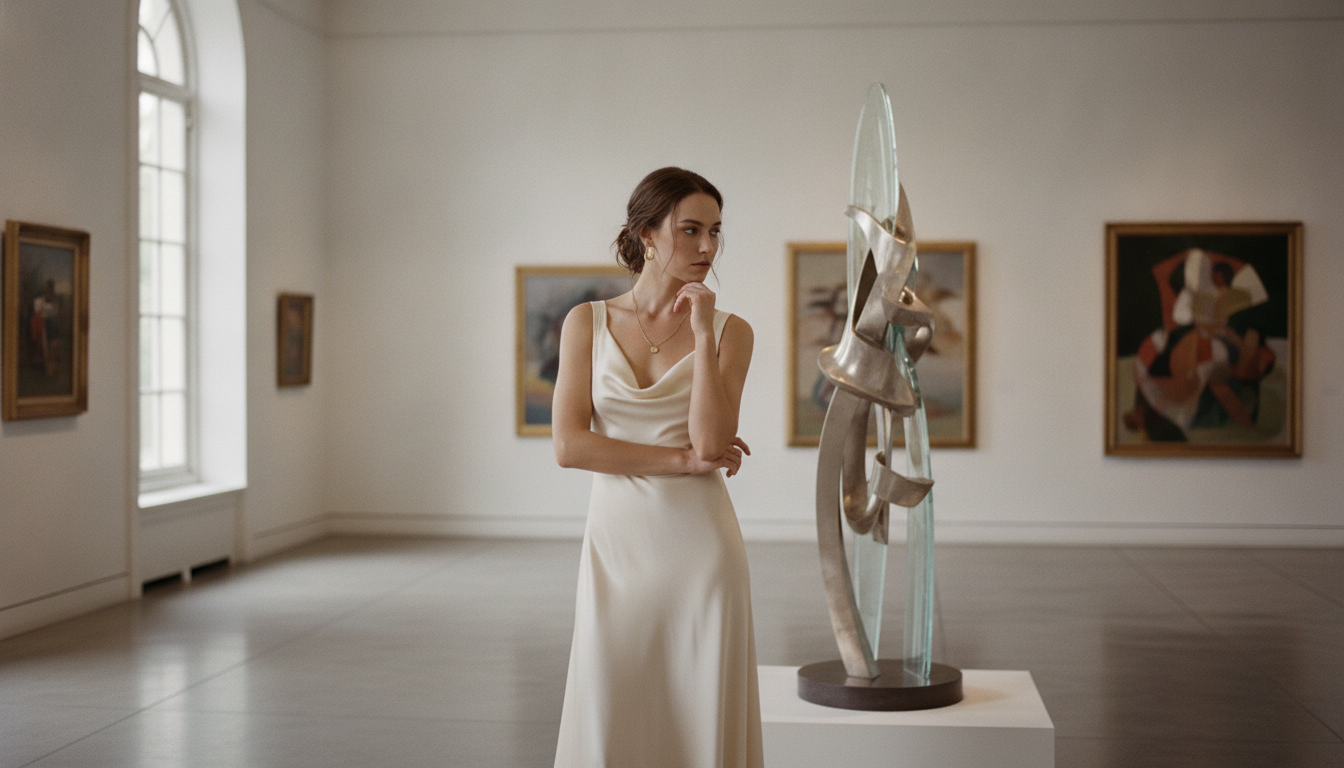
The preview is your chance to experience the works physically. I always plan at least 90 minutes for it. On my last visit to the Neumeister auction house in Munich, I took along a small notebook and discreetly photographed the works that interested me. Discreetly means: without flash, without disturbing other visitors, and only after I asked a staff member for permission.
Here's my routine: I always start with the works that appeal to me emotionally, not with the most expensive ones. In front of a Franz Marc watercolor I stood for a full ten minutes, studying the brushwork, the color transitions, the framing. Only afterward do I look at the catalog entry: provenance, exhibition history, estimate. The order matters because it keeps the price from influencing my emotional reaction.
Striking Up Conversations With Experts
The specialists on site are goldmines of information. At Ketterer Kunst in Hamburg, I spent 25 minutes talking with an expert in German postwar art about the authenticity of a supposed Baselitz. She showed me details in the handwriting of the brushstroke that only a trained eye can recognize. Conversations like that are priceless, but you have to strike the right tone: interested, but not pushy. My question was: "Can you help me understand the particularities of this work in the context of the artist's creative period?" Not: "Is this real?"
Similar to elegant appearances as a companion, here too it's about showing interest without radiating neediness.
Financing and Budget: What Collecting Art Really Costs
Set an absolute limit before you enter the room. My rule of thumb: my maximum bid is 80 percent of my available budget. The remaining 20 percent is a reserve for the buyer's premium, which, depending on the auction house, is between 25 and 28 percent of the hammer price. With a hammer price of €50,000 (about $55,000), you therefore actually pay around €63,500 (about $70,000) including VAT.
On top of that there are often transport and insurance costs. My Neo Rauch from Lempertz had to be transported climate-controlled from Cologne to Frankfurt: €1,200 (about $1,300). Insurance for the first twelve months: another €800 (about $880). These incidental costs are often underestimated, but quickly add up to 3-5 percent of the purchase price.
Online Auctions: My Experiences With Digital Platforms
Since 2022, I've also been bidding online regularly, mainly at auctions in the "Modern and Contemporary Art" category on the Artsy platform and through the in-house systems of Christie's and Sotheby's. The advantage: you can bid from anywhere, you're more flexible with time and you feel less pressure from the physical presence of other bidders. The disadvantage: you don't see the work in person.
My hybrid approach: I attend the preview physically but then bid online during the live auction. That way I've seen the works but spare myself the nervous atmosphere in the room. On my most recent online bid via the Sotheby's app for a work by Anselm Kiefer (estimate €45,000-65,000, about $50,000 to $71,500), I set a maximum bid of €58,000 (about $64,000) and let the system bid automatically for me. I won at a hammer price of €52,000 (about $57,000); the system had bid for me in €2,000 (about $2,200) increments without my having to intervene manually.
Networking at Gallery Openings and Preview Events
The auction itself is only one part of the art market. At least as important are the preview cocktails and gallery openings, which usually take place two to three days before the main auction. This is where you meet collectors, gallerists, advisors and other art enthusiasts. My best contacts came from a preview dinner at the restaurant Pots in Berlin-Tiergarten before a Grisebach auction in March 2023.
My networking tip: ask open questions about the works, not about prices or investment potential. "What fascinates you about this artist?" opens doors. "Do you think the work will go up in value?" closes them. The right networking strategies are just as decisive here as in any other demanding social environment.
The Right Balance Between Interest and Restraint
Art collectors value authenticity. In a conversation with an established collector at Van Ham in Cologne, I openly admitted that I'd only been collecting for three years and was still learning a lot. His reaction: he invited me to a private viewing of his collection. That openness, paired with real interest, opens doors that showing off keeps closed.
Pitfalls and How I Avoid Them
My biggest mistake: at an auction at the Dorotheum in Vienna in November 2022, I let myself get drawn into a bidding war. My limit was €35,000 (about $38,500) for an Egon Schiele watercolor, and I ended at €47,000 (about $51,700) plus premium. Won emotionally, lost rationally. The work objectively wasn't worth it; I paid an "auction fever surcharge" of an estimated €8,000 (about $8,800).
Since then I follow this rule: when my limit is reached, I stand up and leave the room for five minutes. That physical distance has already helped me keep a cool head several times. At an auction at Neumeister Munich in April 2024, I actually stood up when my limit of €28,000 (about $30,800) was reached. The work went to someone else for €34,000 (about $37,400). Two months later a comparable work turned up at a smaller auction in Stuttgart, and I got it for €24,500 (about $27,000).
Insider Knowledge: What the Pros Won't Tell You
You often make the best deals at smaller, regional auction houses like Hugo Ruef in Munich or Reiss & Sohn in Königswinter. There the competition is lower and the estimates more conservative. At Reiss & Sohn in January 2024, I bought a work by HAP Grieshaber for €12,000 (about $13,200) that would probably have cost €18,000-22,000 (about $19,800 to $24,200) at one of the big houses.
Another insider trick: the last lots of an auction, usually from lot number 180 upward in a 200-lot auction, often fetch lower prices because many bidders have already left. My strategy: I focus specifically on the closing lots when the work meets my criteria.
Long-Term Perspective: Collecting Instead of Speculating

The art market is not a stock exchange. I buy works I want to live with, not primarily as an investment. According to the 2023 Art Market Report from Art Cologne, only about 30 percent of all works acquired at auction turn a profit on resale. The remaining 70 percent stagnate or lose value.
My collection has an estimated value of about €380,000 (about $418,000), built up over four years. But the emotional value is priceless. Every work tells a story: where I was, who I was with, what I felt in that phase of life. That's the true luxury of collecting.
Checklist for Your First Auction
- Register with the auction house at least 48 hours before the auction, with ID and bank confirmation
- Attend the preview in person and plan at least 90 minutes for it
- Set an absolute spending limit at 80 percent of your available budget and factor in a 25-28 percent buyer's premium
- Choose an elegant, understated outfit worth about 15-20 percent of the average lot value
- Avoid the first three rows if you don't want to bid, to prevent misunderstandings
- Note beforehand a maximum of three works you want to bid on, and stick to it strictly
- Bring a small clutch with notebook, catalog and bidder number
Frequently Asked Questions About Art Auctions
What do I wear to an art auction as a woman?
For evening auctions at established houses like Christie's or Sotheby's, I recommend a dark suit or an elegant sheath dress in navy, black or gray, combined with pumps with a 5-7 cm (2 to 2.75 inch) heel. Skip flashy jewelry; a quality watch and understated stud earrings are enough. For afternoon auctions or previews, well-cut trousers with a blouse or a simple dress are appropriate. Your outfit should reflect about 15-20 percent of the average lot value.
How do I behave correctly at art auctions as a beginner?
Arrive at least 20 minutes before the start to get your bearings calmly. Sit from the fourth row back, keep your paddle quietly in your lap and avoid big gestures if you don't want to bid. Silence your phone, don't hold loud conversations and only leave the room between lots, never while a work is being auctioned. If you want to bid, raise your paddle calmly about 30 cm (12 inches) high and maintain eye contact with the auctioneer.
How much budget do I realistically need for my first art auction?
For beginners I recommend a total budget of at least €5,000-8,000 (about $5,500 to $8,800). Of that, you should plan a maximum of 80 percent for the bid, so €4,000-6,400 (about $4,400 to $7,000). You need the remaining 20 percent for the buyer's premium of 25-28 percent of the hammer price plus VAT. On top of that come transport and insurance at about 3-5 percent. With a hammer price of €5,000 (about $5,500), you actually pay around €6,500 (about $7,150) including all additional costs.
Can I also bid at auctions online without being physically present?
Yes, all the major auction houses now offer online bidding via their websites or apps. You have to register in advance and can then bid in real time during the live auction. I do recommend viewing the works in person at the preview beforehand, though, since photos in the catalog often don't convey the actual quality, texture and coloring. My hybrid approach: preview on site, bidding online.
When is the best time for beginners to buy at auctions?
The best opportunities for beginners are regional auction houses outside the main season (July/August and December/January) as well as the closing lots at larger auctions, when many bidders have already left. Avoid the big spring and fall auctions at Christie's or Sotheby's, where competition is greatest. At smaller houses like Reiss & Sohn or Hugo Ruef you often find comparable quality at prices 30-40 percent lower.
My Personal Conclusion After Four Years of Art Auctions
Mastering art auctions doesn't mean buying the most expensive works or sitting in the front rows. It means approaching things with respect, curiosity and a clear plan. My most valuable lesson: stay true to yourself. Only buy what you truly love, not what's trending or a supposedly safe investment. Setting boundaries and keeping your self-respect applies in the auction room too.
The art world is increasingly opening up to a new generation of female collectors who act with confidence, knowledge and financial independence. With this art auction guide and a bit of practice, you too will soon move confidently in this fascinating world. The first hammer fall for your first work will be a moment you never forget, I promise.